246webagency
[ad_1]
On today’s episode of the 5 Things podcast: Alzheimer’s drug lecanemab gains FDA approval
USA TODAY Health Reporter Ken Alltucker puts the FDA approval of Alzheimer’s drug lecanemab in context. Plus, the U.S. will send cluster munitions to Ukraine, nearly half of U.S. tap water is estimated to have dangerous chemicals, Florida Gov. Ron DeSantis is stuck in neutral as he fights for the White House and Meta launches Threads, a Twitter rival.

Podcasts:True crime, in-depth interviews and more USA TODAY podcasts right here
Hit play on the player above to hear the podcast and follow along with the transcript below.This transcript was automatically generated, and then edited for clarity in its current form. There may be some differences between the audio and the text.
Taylor Wilson:
Good morning. I’m Taylor Wilson and this is 5 Things you need to know Friday, the 7th of July 2023. Today, what a newly approved drug might mean for Alzheimer’s patients. Plus, your tap water could have dangerous chemicals, and we check in with the Ron DeSantis presidential campaign.
♦
The Food and Drug Administration yesterday approved the drug Lecanemab for people with Alzheimer’s disease. The move makes it easier for older adults to get the first drug proven to slow down cognitive problems associated with the illness. I spoke with USA TODAY Health Reporter Ken Alltucker to learn more about this major step forward in the fight against Alzheimer’s. Thanks for hopping on the show, Ken.
Ken Alltucker:
Thanks for having me.
Taylor Wilson:
Ken, what is this drug and how does it work?
Ken Alltucker:
It’s a drug that’s been studied for a few years now. Earlier this year, the FDA gave sort of a fast track approval for it, but on Thursday they gave full-fledged approval. And this is a drug that removes a type of protein that accumulates in the brains of Alzheimer’s patients called amyloid. And the drug sort of attacks that and clears it from the brains of patients. And the theory is that if they’re able to remove that plaque, the protein forms plaques, that people’s memory and thinking problems associated with Alzheimer’s disease can slow. It doesn’t get people better. People on the drug don’t improve memory or cognition, but clinical studies for this drug showed that their thinking problems slowed compared to a placebo group.
Taylor Wilson:
And how does this compare with other Alzheimer’s drugs or treatments that we’ve seen come before it?
Ken Alltucker:
Yeah. Well, this is unique because it’s the first drug that has been approved by the FDA in nearly two decades. And the last drug was mainly to manage symptoms. So what the manufacturer of this drug called Eisai, it’s a Tokyo based company, says, is this is the first drug that kind of attacks the underlying biological reasons for the disease. So no drugs before have really done that, that have received full FDA approval. Now it’s really been mixed success and this is the first drug that actually gained FDA approval under this theory. Now it’s not universal. There’s some scientists who believe that we should be pursuing other avenues to attack this disease, but this is certainly a landmark for this particular company.
Taylor Wilson:
And are there any side effects that folks should be worried about here?
Ken Alltucker:
Yeah, this class of drugs, amyloid drugs are known to have side effects, particularly brain swelling and tiny bleeds that often can be shown on a brain image. Most people won’t notice symptoms, but some people will. They could experience a headache or other symptoms, and that’s an important thing that this drug will even have a safety label warning patients and doctors about.
Now, when people are on this medication, they have to get a scan to begin with to show that they actually have this protein, amyloid, in their brain and they have to undergo periodic MRIs while they receive this drug, which is administered by an infusion every other week. So what doctors are looking for are the brain swelling and these tiny brain bleeds. And for most people there are no symptoms, but for some people there are symptoms and in certain cases it’s been linked, these are sort of rare, but it happens, it’s been linked to stroke and even death.
Taylor Wilson:
FDA approval means that more people will have access to this drug. What are advocates saying about that and the medication on the whole?
Ken Alltucker:
When it was initially approved, kind of the fast track approval, which the FDA calls its accelerated approval, the FDA is one agency that vets drugs, the safety and whether drugs work. Now CMS, which is the agency that oversees Medicare, is actually the agency that pays for drugs in many cases, at least for Americans on Medicare. And for this particular disease Medicare covers the 65 and over and that’s most people who have Alzheimer’s, although some younger people can get it as well.
What Medicare decided was it was not going to pay for this drug unless people were enrolled in a clinical study, as long as the drug was under its fast track status under the FDA. Now that the FDA has given full-fledged approval, Medicare has said it will pay for the drug as long as doctors sort of keep track of their patients through what’s called a registry, which is sort of a database. Because this is a new treatment area, they want to make sure that this drug really works and the side effects are not too onerous. So Medicare is still taking a cautious approach to this, but it will cover it.
Taylor Wilson:
Ken Alltucker covers health for USA TODAY. Thanks, Ken.
Ken Alltucker:
Very good. Thank you.
♦
Taylor Wilson:
The US has decided to send cluster munitions to Ukraine to help its military push back Russian forces along the front lines. The Biden administration is expected to announce the move today as part of a new military aid package worth $800 million. A clustering munition is a bomb that opens in the air and releases smaller bomblets across a wide area. They can be controversial for inadvertently hitting civilians. The move comes after former Vice President Mike Pence, speaking on the Hugh Hewitt Show earlier this week, said that he believes the US will go to war with Russia if Ukraine falls. You can read more with our live Ukraine updates page on usatoday.com.
♦
Nearly half of the tap water in the US is estimated to have at least one type of per- and polyfluoroalkyl substances or PFAS. That’s according to a study from the US Geological Survey. The group of chemicals is commonly used in consumer products like non-stick cookware and in the linings of fast food boxes. The chemicals have been linked to human illnesses like cancer, low birth weight, and thyroid disease. The agency found that concentrations of PFAS were similar between public water supplies and private wells. The study also found that those in urban areas are most at risk. Earlier this year, the Environmental Protection Agency announced an effort to restrict and regulate PFAS in food and drinking water to improve public health. The group proposed a federal law that would require companies to disclose whether they use the chemicals in any of their products.
♦
Florida Governor Ron DeSantis has more or less stayed in neutral since launching his presidential campaign in May. I spoke with USA TODAY National Political Correspondent David Jackson about why he’s been slow out the gate and how his campaign plans to catch up. Welcome back to 5 Things, David.
David Jackson:
Okay, thanks for having me.
Taylor Wilson:
So DeSantis has more or less stayed in neutral since his campaign announcement in May. David, where does he stand right now in the polls and what are some reasons for his kind of stagnation so far, especially in comparison to Donald Trump?
David Jackson:
Well, by and large, he’s stayed in the low 20s in the polls, and at times that’s been as many as 30 points behind Donald Trump. And there are several reasons for this. One of them is the fact that it’s not so much DeSantis falling as Trump rising. For some reason, he has managed to turn these indictments of him into political capital with Republican voters. There’s very much a rallying around effect. A lot more Republicans are willing to support him because they’re buying his statement that these indictments are all part of a plot to discredit him. And so far, at least he’s making a lot of hay of that.
There are other reasons, too, of course. And one of them is the fact that Trump is constantly attacking DeSantis and the Florida governor hasn’t always responded to it, but attacks on DeSantis are mainstay of all of Trump’s stump speeches and they’ve gotten a lot of traffic on social media as well, and he attacks him every day.
And another reason is, frankly, DeSantis’ own performance on the stump is leaving some people with a lot to be desired. He’s not the most personable campaigner people have ever seen. He’s not particularly a good glad-hander. He gives a decent speech and he’s very good on policy, but he doesn’t have that sparkle, that oomph that a lot of people were looking for in order to take on Trump.
Taylor Wilson:
David, what does the DeSantis camp say about this relatively slow start?
David Jackson:
It’s still early. I mean, we’re in July. We’re just coming off the July 4th holiday, but people aren’t going to vote until at least January when the Iowa caucuses and the New Hampshire primary are being held. Their mantra is that this is a marathon, not a sprint. And they’re doing the careful things laying the groundwork now for success down the line when people actually start to vote.
First of all, they’re going to rely on the debates. They start in August. They’re hoping to make a lot of hay out of them. Secondly, they’re giving a series of policy speeches designed to draw a contrast with Trump. We saw DeSantis on the Texas border last month complaining that Trump’s record on border security is inadequate.
But most of all, I think, and this is just something that hasn’t been talked about a lot, but is that in all of the early states and many of the battleground states themselves, DeSantis and his allies are putting together voter turnout machines. No one knows exactly how well they’re going to work, but they’re definitely working at basically contacting voters, getting them interested in the race, getting them registered and making plans to get them to the polls when the time comes. And that’s probably going to be the biggest factor going into this, is DeSantis able to get out a vote and keep himself afloat when the actual primaries roll around.
Taylor Wilson:
DeSantis has leaned into quite a few divisive issues politically, thinking about this new immigration security plan and bills restricting LGBTQ rights. David, are his struggles in polling a sign that those might not be winning issues in 2024?
David Jackson:
Maybe, but I don’t think they’re losing issues with Republican voters. Now they may give him problems in a general election, but he will never get there unless he gets the Republican nomination. A lot of the divisive issues you talk about are basically designed to outtrump Trump. I mean, he’s taken very conservative positions on a lot of these issues and he is hoping to peel away some of the folks who backed Trump on some of these things.
Taylor Wilson:
And David, what’s the latest with other GOP contenders ahead of 2024? I mean, is anyone close to Trump or DeSantis for that matter?
David Jackson:
I don’t think so, and certainly the numbers don’t reflect that. Trump, during his attacks on DeSantis, he’s fond of saying that DeSantis won’t be in second place much longer, but there’s really no obvious heir apparent to that slide if DeSantis should indeed slide out of it.
We’ve seen Chris Christie who has made attacking Trump his main reason for running, and he’s focused mostly on New Hampshire. He’s upped his numbers in that state, but he’s no higher than 7% or 8% in any poll that I’ve seen. Well, Mike Pence has gotten a little bit of a bump in recent months. He’s up to 9% in at least one national poll, but that’s not double digits, so you really can’t say he’s competitive with DeSantis either. We’ve got Nikki Haley and Tim Scott are hoping to get their breakthrough in their home state of South Carolina, but obviously both of them can’t do that. And there’s questions about whether either one of them will be able to survive until then. To answer your question, no, I really don’t see any heir apparent to DeSantis’ status as second place.
Taylor Wilson:
David Jackson, great insight as always. Thanks so much.
David Jackson:
Thank you.
♦
Taylor Wilson:
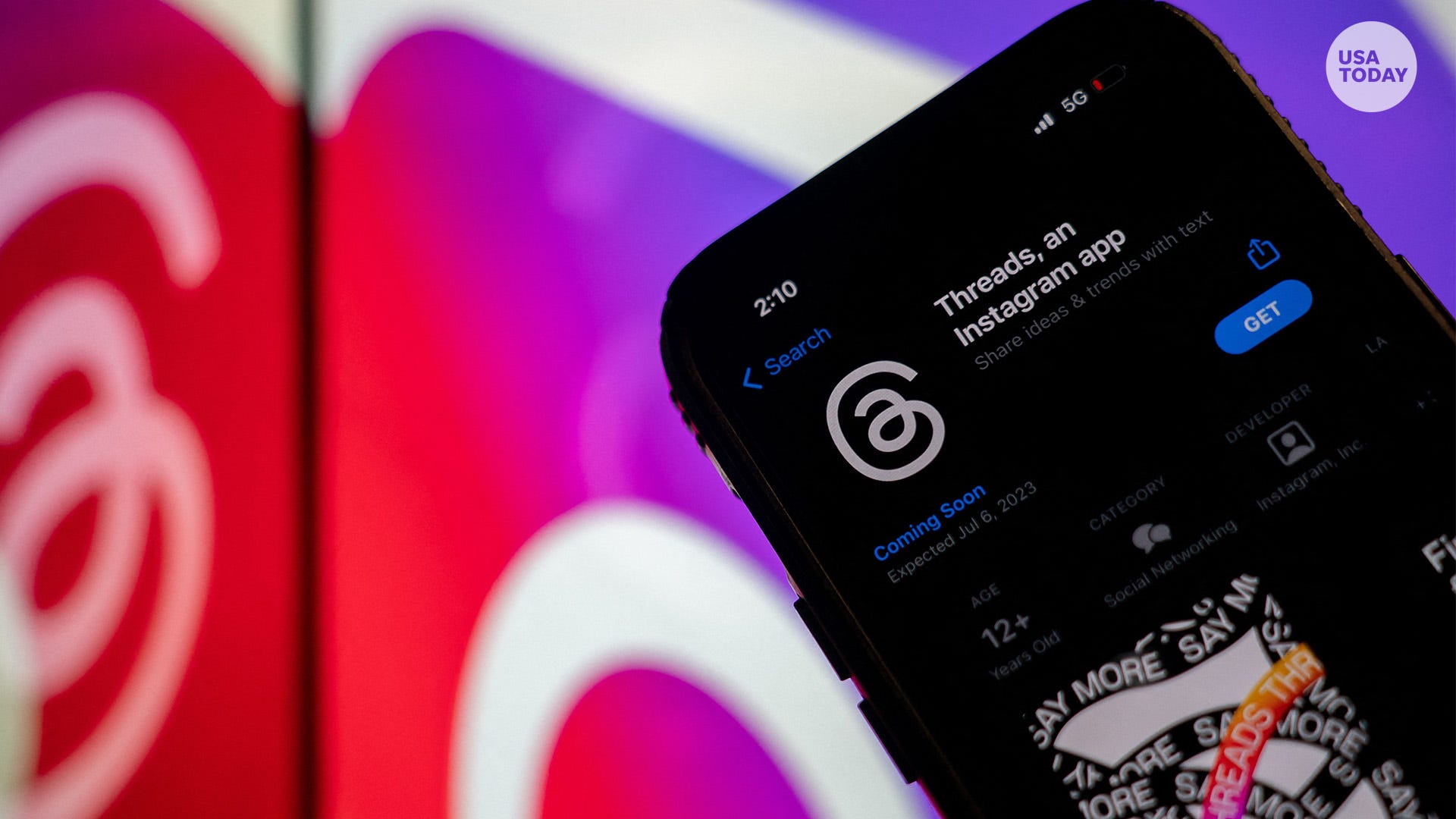
Meta launched its rival to Twitter this week called Threads. It’s essentially a text-based version of Instagram. Threads uses your Instagram username and automatically follows the same people you already follow on Instagram. Posts can be up to 500 characters long compared with 280 characters on Twitter unless you subscribe to Twitter Blue. On Threads you can also include links, photos, and videos up to five minutes long. The launch comes as Twitter has increasingly become controversial under new owner Elon Musk. He recently capped how many posts Twitter users can see on the platform, a move he said was temporary. Still some disaffected users have flocked to alternatives, including Bluesky, Mastodon, or Post. Twitter is threatening to sue Meta, like using the Mark Zuckerberg led company of poaching Twitter employees and stealing trade secrets to build its app.
Thanks for listening to 5 Things. We’re produced by Shannon Rae Green and our executive producer is Laura Beatty. Special thanks to Cherie Saunders, Alexis Gustin and Mark Sovel. If you have any comments, you can reach us at podcasts@usatoday.com. I’m Taylor Wilson, back tomorrow with another episode of 5 Things.
[ad_2]
Source link