246webagency
[ad_1]

On today’s episode of the 5 Things podcast: Missile strike likely not an assault on Poland
White House correspondent Michael Collins explains how Russia praised the U.S. for its measured response after the incident. Plus, USA TODAY senior data journalist Doug Caruso looks at how climate change will test the country’s dam infrastructure.

Podcasts:True crime, in-depth interviews and more USA TODAY podcasts right here.
Hit play on the player above to hear the podcast and follow along with the transcript below. This transcript was automatically generated, and then edited for clarity in its current form. There may be some differences between the audio and the text.
Taylor Wilson:
Good morning. I’m Taylor Wilson and this is 5 Things you need to know Thursday, the 17th of November 2022. Today, where Biden and NATO stand after a missile kills civilians in Poland. Plus, how many dams are failing in the US, and the Senate makes progress on marriage equality.
♦
Leaders of Poland and NATO said yesterday that the missile that killed two people in Poland was not a Russian attack. That eases fears of a potentially escalated war in Europe. But what will the Biden administration’s response be? USA TODAY White House correspondent Michael Collins has been tracking this story and joins me now. Michael, thanks for being here.
Michael Collins:
Thanks for having me.
Taylor Wilson:
So how did the Biden administration react to this missile strike?
Michael Collins:
Poland is a NATO country. NATO’s charter indicates that when there is an attack against one NATO member, it’s considered an attack against all NATO members. So if, in fact, this had been a deliberate attack against Poland, then the United States and other NATO members would have been obligated to respond in some fashion.
Taylor Wilson:|
Michael, was there any difference between the US response and that of some countries in Europe?
Michael Collins:
The Polish government has come out and said that they do not believe that it was fired by Russia. They believe that it was an intercept missile that was fired by Ukraine, that somehow went awry and ended up in Poland. The Russian government, of course, says that they did not fire this missile. And they were very critical of Poland for suggesting that this missile was fired by Russia, and could have been a deliberate attack on Poland. And they were very critical of that. And the Russians, surprisingly, had somewhat good things to say about President Biden. They praiseD him for his restrained response. They said it was a much more professional reaction than the leader of Poland, and some of these other countries, had at the beginning of this attack.
Taylor Wilson:
So what happens next, Michael? What’s the Biden administration’s plan as it pertains to NATO responsibilities surrounding this incident?
Michael Collins:
I think one of the things that you are going to be hearing in the coming days and weeks is that the finger is still going to be pointed at Russia, regardless of whether or not Russia fired this missile. You’re already hearing members of the Biden administration, and NATO, and others, say that while Russia may not have fired this missile and it may have been fired by Ukraine, Russia is to blame because this was an unprovoked war by Russia against Ukraine.
Taylor Wilson:
Michael, thanks so much for making the time.
Michael Collins:
Thank you so much for having me.
Taylor Wilson:
You can follow along with the war in Ukraine with our live updates page on USATODAY.com.
♦
There are over 91,000 dams in the United States, and more than 200 of them have failed in foul weather since 2000. Producer PJ Elliott spoke with USA TODAY’S senior data journalist, Doug Caruso, to find out how climate change and severe weather will test the country’s dam infrastructure.
Doug Caruso:
What we saw in the data that we studied is an increase in the frequency of storms. So what we were looking at was places where the likelihood of certain storms is going up, so you’re getting more of them. And it has a dam that, if it breaks, would kill somebody. And then the third thing is the dam in poor or unsatisfactory condition. We found 3,000 dams that met all of those categories.
PJ Elliott:
Doug, what is the cause of the frequency of the storms increasing?
Doug Caruso:
That’s climate change related. This data came from the University of Wisconsin, and calculates the change since 1995 in the frequency of these storms. And then predicts that those increases in frequency are going to continue to rise as the climate warms.
PJ Elliott:
Is there a certain area of the country that’s being affected more than others?
Doug Caruso:
Yeah, the main area we’re looking at is east of the Rocky Mountains. That’s where things are really becoming wetter.
PJ Elliott:
Doug, obviously, this is an infrastructure problem on top of a climate change problem. But I want to ask if the bipartisan bill that Congress passed last year has anything allocated to help fix these dams?
Doug Caruso:
That package has $3 billion in it for dams. About half a billion dollars of that is earmarked specifically for high hazard dams. Those are the dams that would kill somebody if they break. But the American Society of Dam Safety Officials has said that the actual need for high hazard dams is more in the $24 billion category.
Taylor Wilson:
You can find a link to the full story in today’s show description.
♦
Protections for gay marriage rights crossed a major threshold yesterday, when the Senate defeated a filibuster and set the stage for the Respect for Marriage Act to pass. For more on the bill, I’m now joined by USA TODAY national political reporter Mabinty Quarshie. Mabinty, thanks for being here.
Mabinty Quarshie:
Thank you so much, Taylor. I always love chatting with you.
Taylor Wilson:
So, Mabinty, tell us about this legislation?
Mabinty Quarshie:
So what the Respect for Marriage Act does is it doesn’t quite codify same sex marriage. I want to make that very clear. What it does do is it says that if you get married, say in California, and then you move to Virginia or North Carolina, what that means is that your marriage will be recognized in any state, no matter where you got married, as long as it was legal. The Respect for Marriage Act, it doesn’t just also protect same sex marriage. I think what gets lost is it also protects interracial marriages.
Taylor Wilson:
What are the roots of this bill, and what happens next?
Mabinty Quarshie:
So after the Supreme Court overturned Roe v Wade back in June, there was a lot of concern from LGBTQ advocates, and the community, that gay marriage could be the next protection that was overturned. So there was a lot of pressure on Democrats to pass a law to protect same sex marriage. And back in July, Democrats in the House, they did vote on a same sex marriage bill and it was passed. But, then, Congress struck a deal, where they said they’d wait until after the midterm elections to vote on the Respect for Marriage Act. Because there was concern that they wouldn’t have the votes to pass this bill.
And so, what happened on Monday of this week, is that a group of bipartisan senators unveiled legislation that showed they did have the extra 10 votes that they would need, in addition to the 50 votes from Democrats, to bypass the filibuster in the Senate. And that is what happened on Wednesday. Senators voted 62-37 to move the Respect for Marriage Act to the Senate for an up or down vote. And we think that vote will come soon, but we’re not quite sure. It could come as early as Friday, or it could be pushed back to next week.
Taylor Wilson:
Mabinty Quarshie, thanks so much for stopping by.
Mabinty Quarshie:
Thank you.
♦
Taylor Wilson:
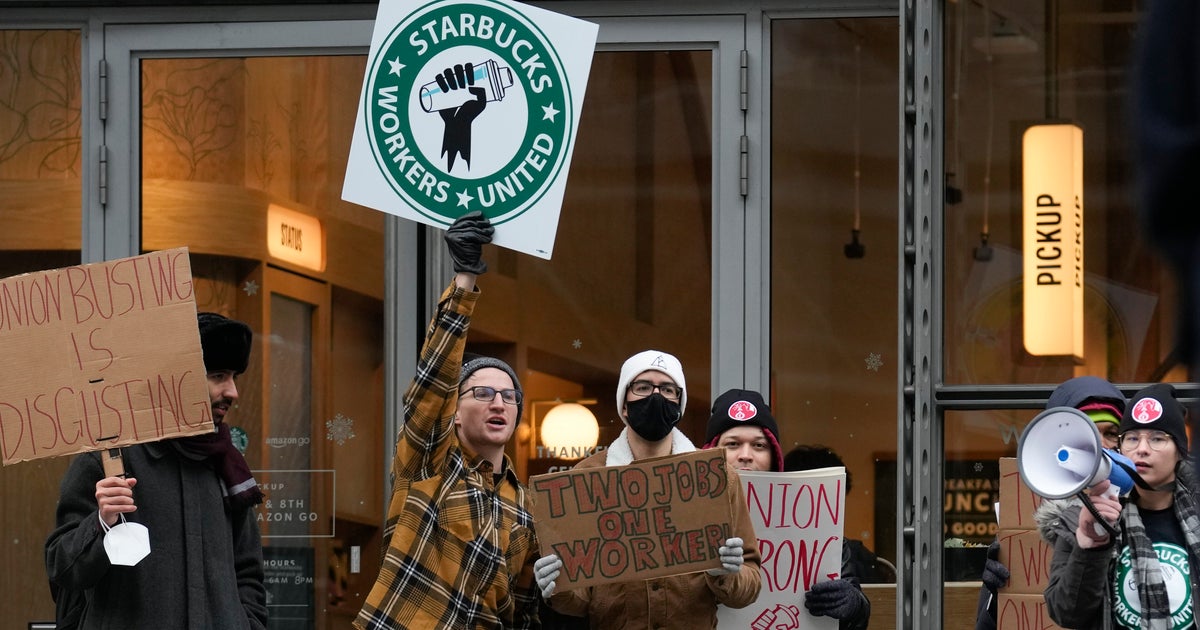
In just three weeks after taking over Twitter, Elon Musk has laid off thousands of workers, abruptly ended the company’s remote work policy, and fired employees that criticized him. Now, this week, Musk is giving employees an ultimatum: either commit to a hardcore work environment or leave. PJ Elliott spoke with USA TODAY tech reporter, Riley Gutierrez McDermid, to find out how the tweeps reacted to their new boss’s plan.
Riley Gutierrez McDermid:
The only way that I could describe their reaction is they’re just laughing in disbelief. There have just been so many things that have had these whiplash turns since Elon Musk took over the company, that they don’t know what to take seriously and what not to take seriously. I think that they look at this as maybe another one of those blue check mark verification moments. Which is, right now, in the middle of the night, he’s saying, “You have to sign this loyalty pledge.” Or if this, too, will be walked back. Elon Musk has a history of shooting from the hip and paying the consequences later.
PJ Elliott:
So is all this sending a message out to the marketplace that we’re returning to the office full time, and it’s okay to start working employees to the bone again?
Riley Gutierrez McDermid:
I think it’s tricky to extrapolate from Elon Musk, and the antics that he has, to every single sector. That being said, he has been a disruptive force in other industries that he’s entered before. Tesla, very famously, is anti-union. And for an automaker – especially one with a large presence in Detroit, competing against American automakers – to not have a union presence was anathema for a long time. But they’ve stayed that way, and they manage to attract talent, one way or the other. He’s very much a libertarian in terms of how he believes people should be compensated and how the free market should work. So I think you can safely say that if you work for Elon Musk, a work-life balance is not a phrase that you’re going to hear much of.
Taylor Wilson:
For more, visit the tech section on USATODAY.com.
♦
Since the murder of George Floyd, more than 80 public schools across the country have renamed from Confederate generals to civil rights icons. Robert E. Lee, a leading Confederate general, had his name removed from 17 schools. While another Confederate general, Stonewall Jackson, was removed from eight. In northern states, according to a review of federal data, few schools were named after Confederate figures. But some schools voted to drop the names of controversial presidents, like James Buchanan, who failed to challenge the spread of slavery immediately before the Civil War. Other states changed names from governors and local politicians who defended slavery. And, in Minnesota, two schools removed the name Henry Sibley, after evidence that he massacred Native Dakota people. Calls for removing these namesakes aren’t new. But Hilary Green, the James B. Duke professor of Africana studies at Davidson College, told USA TODAY that Floyd’s murder accelerated the conversation. You can search a database of schools that have removed racist names at USATODAY.com. We’ve put a link in today’s episode description.
And you can find new episodes of 5 Things every morning on your favorite podcast app. If you have a chance, please drop us a five star rating and review, and we’d love to hear from you by email at podcasts@usatoday.com. I’m back tomorrow with more of 5 Things from USA TODAY.
[ad_2]
Source link